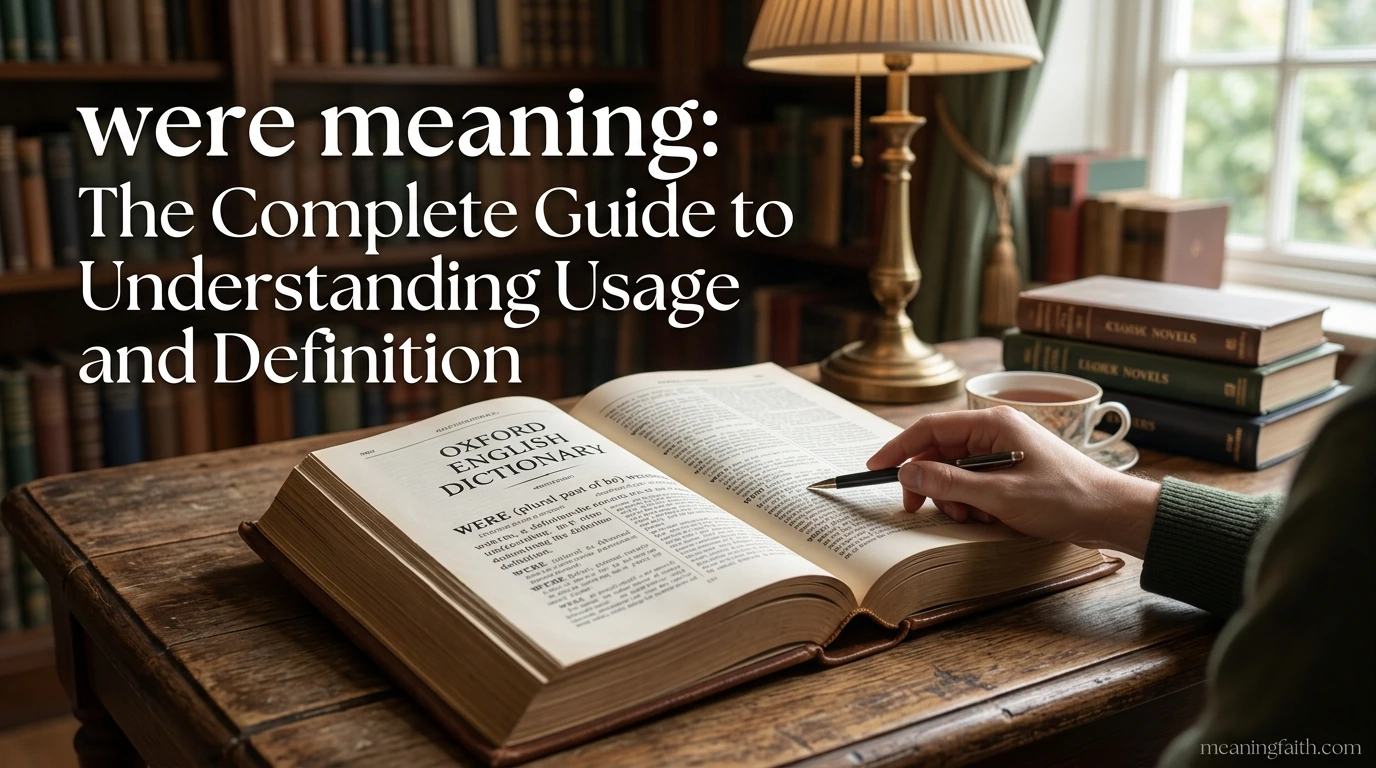
The were meaning refers to the grammatical function and interpretation of the word “were,” which is the past tense form of the verb “to be” used in English grammar. It plays an important role in sentence construction, especially in English grammar rules, subjunctive mood usage, and conditional sentences. Understanding were meaning helps learners improve fluency in ESL learning, linguistics, and everyday communication.
In English grammar, “were” connects closely with subjects like plural subjects and second-person pronoun forms such as “you.” It also appears frequently in academic references like the Cambridge Dictionary and Oxford English Dictionary, which define its usage across formal and informal contexts.
were meaning means: The term “were meaning” refers to the definition and grammatical usage of the word “were,” which is the past tense plural form of the verb “to be” in English grammar. It is used with plural subjects and in conditional or subjunctive mood sentences, as explained in English grammar rules and linguistic references like the Cambridge Dictionary.
Origin & History of were meaning
The origin of were meaning can be traced back to Old English, where early forms of the verb “to be” included variations like “wǣron” and “wære.” These evolved over centuries into modern English verb forms. The development of “were” is closely linked to the verb “to be,” one of the oldest and most irregular verbs in the English language.
During Middle English, grammar rules were less standardized, and “were” appeared in various forms depending on dialect and region. Over time, linguistic standardization shaped modern usage, especially in British English and later American English.
Linguists often refer to historical records in the Oxford English Dictionary to explain how “were” became associated with plural subjects and subjunctive mood expressions. This evolution reflects broader changes in English grammar, influenced by Germanic language structures.
Today, understanding the origin of were meaning helps learners appreciate why English retains irregular verb forms. It also shows how language adapts while preserving older grammatical systems that remain in modern usage.
Primary Meaning of were meaning
The primary were meaning is the past tense plural form of the verb “to be.” It is used when referring to more than one subject in past situations. For example, “They were happy” shows a completed past state involving multiple people.
In English grammar, “were” is also used with the second-person pronoun “you,” regardless of singular or plural. For instance, “You were late yesterday” applies even if “you” refers to one person.
Another key aspect of its meaning appears in conditional sentences and subjunctive mood structures. Sentences like “If I were rich” show hypothetical situations rather than real past events.
Grammar experts in ESL learning emphasize that “were” is one of the most frequently misused verbs because learners often confuse it with “was.” However, “were” strictly follows plural subjects and specific grammatical moods, making it essential in structured English communication.
Cultural Meanings of were meaning
The were meaning extends beyond grammar into cultural and educational contexts. In English-speaking education systems, “were” is one of the first irregular verb forms taught to students learning English grammar.
In literature, especially in British and American writing traditions, “were” often appears in poetry and storytelling to create emotional depth or hypothetical reflection. Writers use subjunctive mood forms like “If I were” to express imagination, regret, or possibility.
In global ESL learning environments, such as classrooms in Asia and Europe, “were” is a key teaching point because it reflects differences between English and other languages that do not change verb forms based on number or mood.
Culturally, mastering were meaning is often associated with higher English proficiency. Educational institutions like Cambridge Dictionary-based curricula highlight its importance in standardized testing and academic writing.
Spiritual / Religious Meaning (if applicable)
While were meaning is primarily linguistic, it occasionally appears in religious or philosophical translations of texts like the Bible. In older English translations such as the King James Version, “were” is used to describe past states or divine actions.
For example, phrases like “They were chosen” or “The disciples were called” reflect historical narration in religious texts. These uses emphasize completed actions or states in spiritual storytelling.
In theological studies, linguists analyzing Old English and early Modern English versions of religious scriptures note that “were” helps maintain narrative consistency in plural descriptions of people or events.
Although not inherently spiritual, the grammatical structure of were meaning plays a role in how sacred texts are interpreted in English-speaking traditions.
Slang / Modern Usage (if applicable)
In modern informal English, were meaning does not directly function as slang, but “were” appears frequently in texting, social media, and casual conversation.
For example, people might write “You were like…” to describe reactions or emotions in storytelling. In online communication, “were” is often shortened in speech patterns but not typically abbreviated in writing.
In meme culture, conditional phrases like “If I were you” are sometimes used humorously or sarcastically. This reflects how grammar structures evolve into expressive tools in digital communication.
However, unlike slang words that change meaning, “were” maintains its grammatical role consistently across platforms, including messaging apps and social networks.
Context-Based Meanings of were meaning

The were meaning changes slightly depending on context, even though its core function remains grammatical. Here are three major contexts:
In past tense narration, “were” describes completed actions: “They were at the park yesterday.” This indicates a finished event involving plural subjects.
In conditional sentences, it expresses hypothetical situations: “If she were here, she would help.” This use belongs to the subjunctive mood, which is important in formal English grammar.
In questions and negatives, “were” helps structure sentence meaning: “Were you at home?” or “They were not ready.” These forms are essential in communication clarity.
Understanding context is key in linguistics because meaning in English grammar often depends on sentence structure rather than the word alone.
Color / Design / Style Variations (if applicable)
Although were meaning is not related to color or design, it appears in stylistic writing variations in literature and typography. Writers sometimes emphasize “were” in poetry or dramatic text to highlight emotional or reflective tone.
In creative writing, italics or capitalization may be used to stress conditional phrases like “If I were you,” giving emotional weight to the sentence.
In educational design materials, grammar charts often highlight “was vs were” using color-coded tables to help ESL learners distinguish usage patterns.
Thus, while not visually symbolic, were meaning can be represented in structured learning designs for clarity and memorization.
Common Misconceptions About were meaning
A common misconception is that “were” is interchangeable with “was.” However, in standard English grammar, “were” is used with plural subjects and specific subjunctive forms, while “was” is singular.
Another misunderstanding is that “you was” and “you were” are interchangeable. In correct grammar, “you were” is always standard, regardless of singular or plural reference.
Some learners also believe “were” only refers to past tense events. In reality, it also appears in hypothetical or conditional statements that are not past-related.
Grammar guides from the Cambridge Dictionary and ESL learning resources consistently clarify these distinctions to avoid confusion.
How to Use were meaning in a Sentence
Here are examples showing correct usage of were meaning in sentences:
- They were playing football in the park yesterday.
- If I were taller, I would join the basketball team.
- You were very helpful during the project.
- The students were excited about the trip.
- Were you at home last night?
These examples show different contexts including past tense narration, conditional mood, and interrogative structure. Mastering these uses improves fluency in English grammar and communication accuracy.
Frequently Asked Questions About were meaning
What does were meaning mean?
The were meaning refers to the grammatical definition of “were,” which is the past tense plural form of the verb “to be.” It is used with plural subjects and in conditional or subjunctive sentences to express past or hypothetical situations.
What is the origin of were meaning?
The origin of were meaning comes from Old English forms like “wǣron.” Over time, it evolved into modern English through linguistic changes in Middle English, eventually becoming standardized in English grammar rules used today.
What does were meaning mean in conditional sentences?
In conditional sentences, were meaning expresses hypothetical or unreal situations, such as “If I were you.” This usage is part of the subjunctive mood in English grammar, often taught in ESL learning.
Is were meaning positive or negative?
The were meaning itself is neutral. Its tone depends on context. It can describe positive, negative, or hypothetical situations based on sentence structure and intent in communication.
What is the difference between were meaning and was?
“Was” is used for singular subjects, while were meaning applies to plural subjects and subjunctive forms. For example, “I was” is past singular, while “They were” is past plural.
What does were meaning symbolize?
In grammar, were meaning symbolizes plurality, past states, and hypothetical conditions. In literature, it can symbolize imagination, reflection, or unreal possibilities.
Why do people use were meaning?
People use were meaning to correctly express past actions, describe plural subjects, and form conditional statements. It is essential for accurate English grammar and clear communication.
Related Searches & Topics
The concept of were meaning is closely related to English grammar rules involving the verb “to be.” Learners often explore how it differs from “was” to understand subject-verb agreement better. This helps improve writing accuracy in both formal and informal contexts.
Another related topic is the subjunctive mood, which uses “were” to describe hypothetical situations. This structure is common in expressions like “If I were you,” widely used in both spoken and written English.
Many students also search for “was vs were rules” because understanding the difference is essential in ESL learning. This comparison helps clarify singular and plural verb usage in past tense sentences.
Grammar guides often connect were meaning with conditional sentences, which are used to express possibilities and imagined outcomes. These structures are important in advanced English communication.
Finally, linguistics studies often explore Old English verb evolution to explain why “were” remains irregular today. This historical perspective helps learners understand language development over time.
Conclusion
The were meaning includes its role as a past tense plural verb, its use in subjunctive mood, and its function in conditional sentences. It is a key part of English grammar that helps express time, number, and hypothetical situations clearly.
Understanding were meaning improves communication, writing accuracy, and fluency in both academic and everyday English. Which meaning of were meaning resonates most with you?

Ethan Reynolds is a researcher and writer at MeaningFaith.com, focusing on spiritual meanings, signs, and symbolic interpretations. His work combines careful research with practical explanations, making complex topics easier to understand for readers seeking meaningful answers.