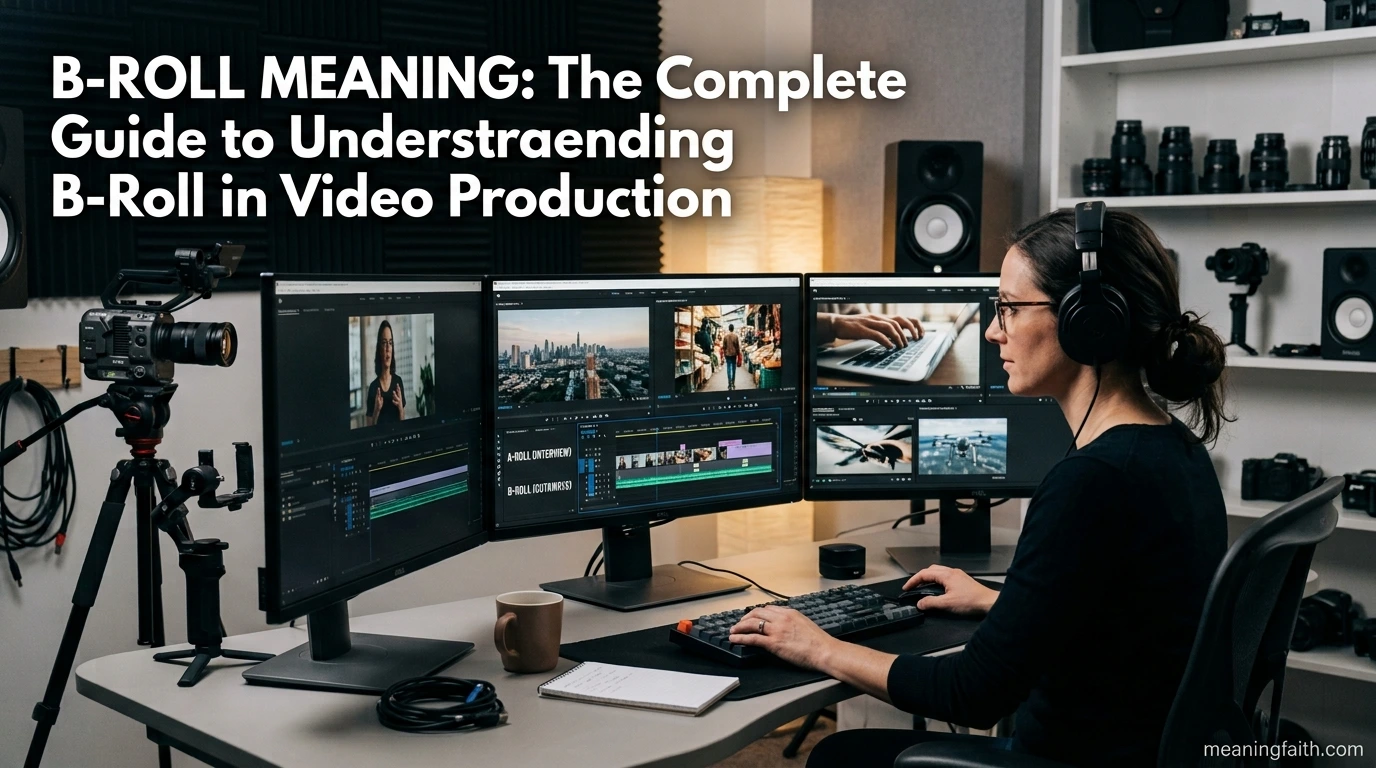
B roll meaning refers to the supplemental video footage that supports the main shots in a film or video. While the primary footage, often called A-roll, contains the main action, interview, or presentation, B-roll provides additional visuals that make the story more engaging, informative, and visually appealing. Whether you are watching a documentary, a YouTube video, a television commercial, or a news report, B-roll is almost always working behind the scenes to improve the viewing experience.
In modern video production, editors use B-roll to illustrate ideas, cover cuts, create smooth transitions, and maintain audience interest. From close-up shots of objects to wide scenic views captured with a camera, B-roll helps transform simple footage into professional storytelling. Understanding the meaning of B-roll is valuable for beginners, content creators, business owners, students, and anyone interested in filmmaking or cinematography.
b roll meaning means: B-roll is secondary video footage used alongside the main recording, known as A-roll, to support the story, provide visual context, hide edits, and make videos more engaging. In filmmaking and video production, B-roll enhances storytelling by showing related scenes, actions, or details while the main narration or interview continues.
Origin & History of b roll meaning
The term “B-roll” comes from the early days of film production and television broadcasting. Before digital editing became common, editors physically worked with rolls of film. The primary footage was stored on one reel, often referred to as the A-roll, while supporting footage was placed on a separate reel known as the B-roll.
This editing method became especially popular in television news and documentary production. Editors would combine both film reels to create smoother transitions and add supporting visuals. Instead of showing only an interview, they could insert footage of locations, objects, or activities while the speaker continued talking.
As digital editing software such as Adobe Premiere Pro and Final Cut Pro replaced physical film editing, the term remained. Today, filmmakers no longer work with separate film reels, but the concept of B-roll is still essential.
Understanding this historical background explains why the name continues to be used even though modern editing is completely digital. The meaning has stayed remarkably consistent despite decades of technological change.
Primary Meaning of b roll meaning
The primary meaning of B-roll is simple: it is extra footage that supports the main story without replacing it. If A-roll contains the interview, speech, or central action, B-roll shows related visuals that help viewers understand what is being discussed.
For example, imagine a travel vlogger talking about visiting Paris. The A-roll might show the presenter speaking directly to the camera. The B-roll would include scenes of the Eiffel Tower, cafés, busy streets, museums, and local food while the narration continues.
B-roll serves several important purposes:
- Adds visual interest.
- Explains information more clearly.
- Covers awkward cuts in editing.
- Improves pacing.
- Creates emotional impact.
- Makes videos appear more professional.
Professional editors often spend nearly as much time selecting effective B-roll as they do editing the main footage. Strong supporting visuals can significantly improve audience engagement without changing the spoken content.
Unlike decorative footage, effective B-roll always supports the story or message. Every shot should have a purpose, whether it provides context, demonstrates an idea, or builds atmosphere.
Cultural Meanings of b roll meaning
Although B-roll is a technical filmmaking term rather than a cultural symbol, its use varies across countries, industries, and storytelling traditions.
In documentary filmmaking, especially productions influenced by public broadcasters, B-roll often emphasizes realism. Filmmakers capture authentic daily life instead of staged scenes, allowing audiences to experience events naturally.
Television news organizations rely heavily on B-roll to illustrate developing stories. While a reporter explains an event, viewers simultaneously see footage from the location, interviews, or relevant activities. This approach improves understanding while keeping broadcasts visually engaging.
Social media has also expanded the role of B-roll. Platforms like YouTube, TikTok, and Instagram encourage creators to use fast-paced supporting footage to maintain viewer attention. Modern audiences often expect quick visual changes, making B-roll even more valuable than it was during traditional television broadcasting.
Corporate videos, educational content, and marketing campaigns also depend on B-roll to demonstrate products, workplaces, customer experiences, and behind-the-scenes operations. Instead of simply telling viewers about a company, B-roll allows them to see the story unfold naturally.
Today, B-roll represents a universal storytelling technique that crosses languages and cultures because visual storytelling communicates ideas effectively regardless of spoken language.
Slang / Modern Usage of b roll meaning
Outside professional filmmaking, the phrase “B-roll” has taken on a broader meaning. Many creators now use it casually to describe any supplementary footage added to improve a video. For example, a YouTuber might say, “I’ll grab some B-roll of the coffee shop,” meaning they plan to record scenic or detailed shots that support the main content.
On social media, B-roll often refers to aesthetically pleasing clips used between talking-head segments. Lifestyle influencers film coffee being poured, keyboards being typed on, sunsets, city streets, or close-ups of products to keep viewers visually engaged.
Modern creators also use B-roll to:
- Break up long talking segments.
- Add cinematic quality to simple videos.
- Highlight products or locations.
- Build emotion through visuals.
- Improve storytelling without extra dialogue.
Although the casual use of the term is broader than its traditional filmmaking definition, the core idea remains the same: B-roll is supporting footage that enhances the viewer’s experience.
Context-Based Meanings of b roll meaning
In Documentary Filmmaking
In documentaries, B-roll provides evidence and context. If someone is discussing wildlife conservation, viewers may see forests, animals, researchers, or historical footage while the interview audio continues. These visuals strengthen credibility and make complex topics easier to understand.
In YouTube Videos
For YouTubers, B-roll is an editing tool that keeps audiences engaged. Product reviews often include close-up shots, travel videos show scenic locations, and educational channels use demonstrations while explaining concepts. Good B-roll helps reduce viewer fatigue during longer videos.
In Business and Marketing
Businesses use B-roll to showcase offices, employees, manufacturing processes, customer interactions, and products. Instead of relying only on narration, companies visually demonstrate their services, making promotional videos more persuasive and trustworthy.
In News Broadcasting
Television journalists depend heavily on B-roll. Reporters rarely appear on screen for an entire story. Instead, interviews are combined with footage from the event, helping audiences understand what happened while maintaining visual interest.
Color / Design / Style Variations (if applicable)
Unlike symbols or logos, B-roll does not have color meanings. However, its visual style changes depending on the purpose of the production.
A corporate video may use bright, clean, and stable shots to communicate professionalism. A travel film often includes colorful landscapes, slow-motion scenes, and wide camera angles to inspire viewers. Documentary B-roll usually focuses on realism with minimal staging, while cinematic productions frequently employ dramatic lighting, creative camera movement, and carefully planned compositions.
Editors also adjust color grading during post-production. Warm tones may create a welcoming atmosphere, while cooler colors can suggest seriousness or mystery. These creative choices influence how audiences interpret the supporting footage.
Planning B-roll often begins with a storyboard, ensuring that each shot contributes to the narrative instead of serving as decoration. Whether recorded with a professional cinema camera or a smartphone, effective B-roll prioritizes storytelling over visual effects alone.
Common Misconceptions About b roll meaning
Many beginners misunderstand what B-roll actually is. One common misconception is that any extra footage automatically qualifies as B-roll. In reality, effective B-roll must support the main story or message.
Another myth is that B-roll is less important than A-roll. Professional editors know the opposite can be true. Well-planned supporting footage often determines whether a video feels polished or amateur.
Some people also believe B-roll must be cinematic or recorded with expensive equipment. While high-quality visuals certainly help, thoughtful composition, relevant subjects, and careful editing matter far more than camera price.
There is also confusion between B-roll and stock footage. Stock clips can certainly serve as B-roll, but original footage recorded specifically for a project is equally valid.
Understanding these differences helps creators produce stronger videos and avoid using unnecessary clips that distract instead of supporting the narrative.
How to Use b roll meaning in a Sentence
Here are a few natural examples:
- “The editor added B-roll of the city skyline to make the interview more engaging.”
- “Our documentary needed additional B-roll to illustrate the speaker’s experiences.”
- “She recorded B-roll of the restaurant before filming her food review.”
- “The marketing team captured product B-roll for the new commercial.”
- “Learning how to shoot B-roll improved the overall quality of my videos.”
Each sentence demonstrates how the term is commonly used in filmmaking, business communication, or online content creation.
Frequently Asked Questions About b roll meaning
What does b roll meaning mean?
B-roll refers to supporting video footage that complements the primary recording, known as A-roll. Editors use it to illustrate ideas, hide edits, improve pacing, and make videos more visually engaging without replacing the main content.
What is the origin of b roll meaning?
The term originated during the era of physical film editing. Editors worked with separate film reels, using one for primary footage and another for supporting footage. Although digital editing has replaced film reels, the terminology remains widely used.
What does b roll meaning mean in YouTube videos?
On YouTube, B-roll usually refers to supplemental clips inserted between talking segments. Creators use it to demonstrate products, show locations, illustrate tutorials, or simply maintain audience attention throughout a video.
Is b roll meaning positive or negative?
B-roll is a neutral technical term. It simply describes secondary footage used in video production. When planned and edited well, it improves storytelling and creates a more professional viewing experience.
What is the difference between b roll and A-roll?
A-roll contains the primary action, interview, narration, or presentation. B-roll supports that primary footage by adding relevant visuals, improving continuity, and giving viewers additional context without interrupting the story.
Why do people use B-roll?
People use B-roll because it makes videos easier to watch and understand. Supporting footage adds visual variety, explains concepts more clearly, covers edits, and helps communicate emotions that words alone may not fully express.
Related Searches & Topics
Many people searching for B-roll also want to understand A-roll. Learning both terms together makes it much easier to understand how professional editors structure interviews, documentaries, and promotional videos.
Another related search is cinematography. While cinematography covers the overall visual style of a production, B-roll is one specific technique used to improve storytelling through carefully chosen supporting footage.
Users also explore storyboard planning. A storyboard helps filmmakers decide which B-roll shots they need before filming begins, saving time during production and editing.
Many beginners compare Adobe Premiere Pro with Final Cut Pro when learning how to edit B-roll. Both editing programs include powerful tools for arranging clips, adding transitions, and improving the pacing of a video.
Another common search involves camera movements such as pans, tilts, tracking shots, and close-ups. These techniques are frequently used when filming B-roll because they create visually interesting sequences that support the main narrative.
Conclusion
The b roll meaning centers on supplemental footage that strengthens the primary story by adding context, visual interest, and smoother editing. From its origins in traditional film reels to its essential role in documentaries, marketing, news broadcasts, and YouTube videos, B-roll remains one of the most valuable tools in modern video production.
Understanding the difference between A-roll and B-roll, knowing when to use supporting footage, and planning those shots carefully can greatly improve the quality of any video project. Whether you are an aspiring filmmaker or a content creator, mastering B-roll helps transform ordinary recordings into engaging visual stories. Which meaning of b roll meaning resonates most with you?

Ethan Reynolds is a researcher and writer at MeaningFaith.com, focusing on spiritual meanings, signs, and symbolic interpretations. His work combines careful research with practical explanations, making complex topics easier to understand for readers seeking meaningful answers.