Loins meaning refers to the area of the human body between the lower ribs and the hips, often including the waist, lower back, and reproductive region. While the term began as an anatomical description, it has developed broader meanings in language, culture, religion, and literature over centuries.
The word appears frequently in the Bible, historical writings, and traditional expressions. In many contexts, loins symbolize strength, fertility, readiness, and family lineage. Ancient cultures often used the term when discussing physical power, descendants, or preparation for important tasks.
Today, people may encounter the word in religious texts, literature, genealogy discussions, or common phrases such as “gird up your loins.” Understanding the various meanings helps clarify why the term remains relevant despite being less common in everyday speech.
Whether you are reading scripture, studying anatomy, exploring language history, or simply curious about an unfamiliar word, this guide explains the full meaning of loins in a clear and practical way.
loins meaning means: the area of the body around the waist, hips, and lower abdomen, especially the region associated with physical strength and reproduction. In religious, literary, and historical contexts, loins can also symbolize fertility, descendants, readiness for action, and personal power.
Origin & History of loins meaning
The word “loins” has a long linguistic history. It comes from the Latin word lumbus, meaning the lower back or loin area. Through Old French and Middle English development, the term became established in English as “loin” and later “loins” when referring to the body region collectively.
Historically, the term was used in anatomy to describe the area between the ribs and the pelvis. In ancient societies, this part of the body was associated with strength because it supported movement, labor, and physical endurance.
The Bible played a major role in preserving the term. The King James Version frequently uses “loins” in both literal and symbolic ways. For example, references to descendants “coming from one’s loins” connected the word to genealogy and family lineage.
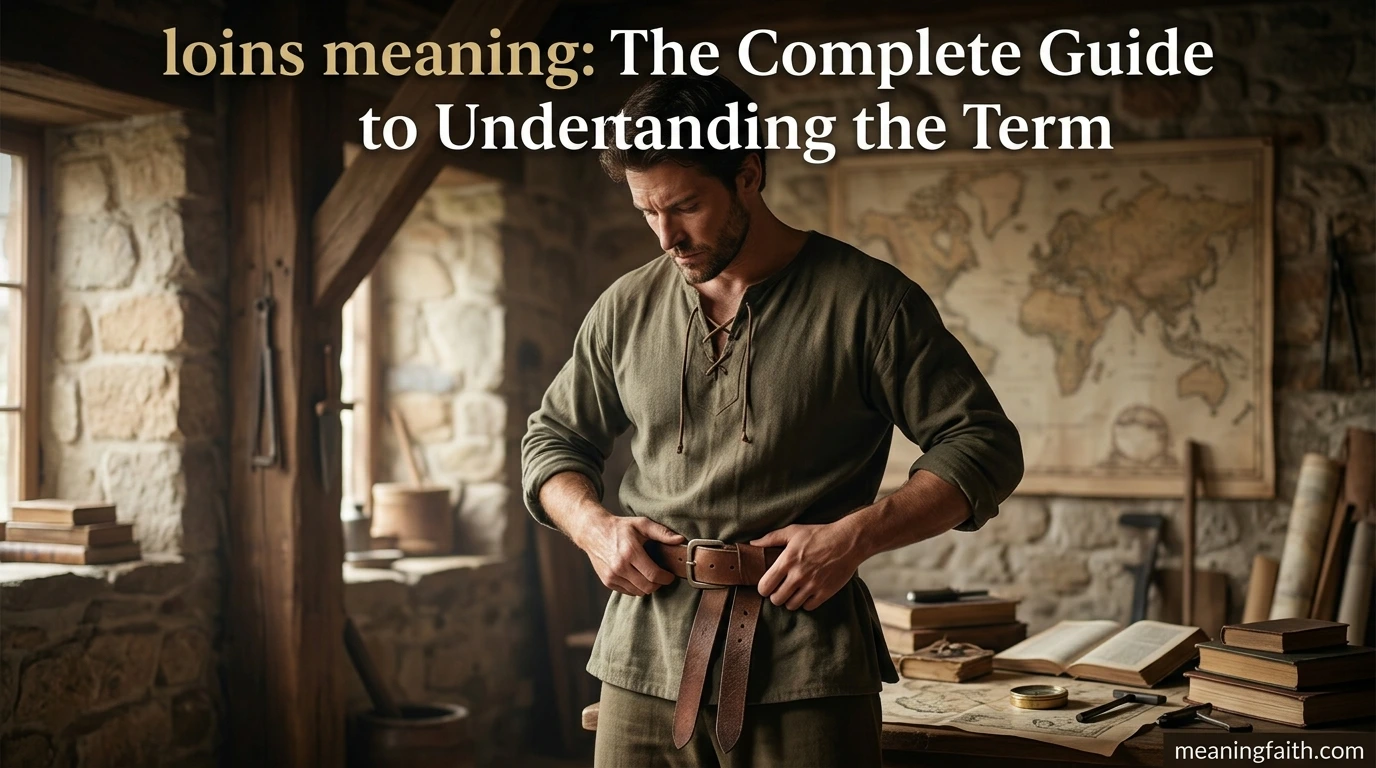
In ancient cultures, clothing often included long robes. Before travel, work, or battle, people would gather and secure their garments around the waist. This practice contributed to the expression “gird up your loins,” meaning to prepare for action.
Over time, the word expanded beyond anatomy and became a symbol of readiness, fertility, and strength. Although modern English uses the term less frequently, its historical importance remains visible in literature, religion, and traditional expressions.
Primary Meaning of loins meaning
The primary definition of loins refers to the lower part of the torso located between the ribs and the hips. Anatomically, it includes areas around the waist, lower back, and pelvis.
In everyday language, this meaning is rarely used in medical settings today because modern anatomical terminology tends to be more specific. However, dictionaries still recognize this as the fundamental definition.
The term often carries associations beyond simple body structure. Historically, the loins were viewed as the center of physical power. Many cultures linked the area to movement, endurance, and bodily strength because major muscles supporting posture and motion are located nearby.
Another important aspect involves reproduction. Since the region includes reproductive organs, loins became associated with fertility and the continuation of family lines. This connection explains why historical texts frequently refer to descendants originating from someone’s loins.
The word is usually encountered in older literature, historical documents, and religious texts rather than casual conversation. Nevertheless, understanding its primary anatomical meaning provides the foundation for interpreting its symbolic and cultural uses.
When readers encounter references to loins, they should first recognize the physical body region being described before considering any symbolic implications attached to the term.
Cultural Meanings of loins meaning
Across different cultures, loins have represented much more than a physical body part. The symbolism often reflects values related to strength, family, survival, and continuity.
In many ancient societies, physical strength was essential for farming, hunting, warfare, and daily life. Because the waist and hip region contributed significantly to movement and endurance, loins became a metaphor for power and capability.
Fertility is another widespread cultural meaning. Numerous traditions connected the reproductive area with the creation of future generations. As a result, references to loins often implied the ability to produce descendants and preserve family heritage.
Genealogy and ancestry also play important roles. Historical records frequently used phrases describing children or descendants as coming from a person’s loins. Such language emphasized bloodlines and family continuity.
Literature has reinforced these cultural meanings. Poets and authors often used loins symbolically to suggest vitality, courage, or the continuation of a family legacy. These associations helped the term remain meaningful even when its anatomical usage became less common.
In modern culture, people may still encounter these symbolic interpretations in historical novels, educational materials, religious discussions, and studies of ancient traditions. Understanding these cultural layers reveals why the term carries deeper significance than its simple anatomical definition might suggest.
Spiritual / Religious Meaning
The spiritual significance of loins is particularly important in biblical and religious contexts. Many readers first encounter the term while studying scripture.
In the Bible, loins often symbolize strength, preparedness, and moral readiness. One of the most recognized expressions is “gird up your loins.” Historically, this referred to securing loose clothing before work or travel. Spiritually, it came to mean preparing oneself mentally, emotionally, and spiritually for a challenge.
The term also appears in passages discussing descendants. Biblical writers frequently described offspring as coming from a person’s loins. This language emphasized lineage, inheritance, and the continuation of God’s promises through future generations.
Another religious meaning involves strength and endurance. References to strong loins often symbolized resilience and the ability to fulfill responsibilities faithfully. The image communicated both physical and spiritual capability.
Some theological interpretations connect loins with disciplined living and readiness to serve. Religious teachers have used the metaphor to encourage believers to remain prepared for duty, faithfulness, and personal growth.
These symbolic meanings have influenced religious language for centuries. Even readers who are unfamiliar with ancient customs can appreciate how the term evolved into a powerful spiritual metaphor representing preparation, strength, and generational continuity.
Slang / Modern Usage

Unlike many older words, loins have not developed extensive modern slang uses. However, the term still appears in contemporary language, often carrying figurative or humorous meanings.
One common modern use relates to romantic attraction or desire. Phrases involving “stirring in the loins” are sometimes used jokingly or dramatically to suggest strong feelings of attraction. This usage stems from the historical association between loins and reproduction.
Writers, comedians, and commentators occasionally employ the term for humorous effect because it sounds formal or old-fashioned. The contrast between ancient wording and modern situations often creates comedy.
In popular media, fantasy novels, historical dramas, and adventure stories frequently use expressions involving loins to evoke a traditional or heroic atmosphere. Such usage helps establish a connection with older forms of English.
The phrase “gird your loins” has survived particularly well in modern speech. People use it figuratively to mean preparing for a difficult task, challenging conversation, examination, or major project.
Although not a common slang word among younger speakers, loins remains recognizable because of its presence in literature, movies, religious language, and popular expressions. Its continued use demonstrates how historical terms can maintain relevance through metaphor and cultural tradition.
Context-Based Meanings of loins meaning
The meaning of loins changes depending on context. Understanding these differences helps readers interpret the term accurately.
Anatomical Context
In anatomy, loins refer to the lower torso region between the ribs and hips. This is the most literal and original meaning. Medical discussions today usually employ more specific anatomical terms, but the historical definition remains valid.
Biblical Context
In scripture, loins frequently symbolize strength, readiness, descendants, and responsibility. The term often carries a spiritual lesson rather than simply describing a body part.
Literary Context
Authors use loins as a symbolic device. Depending on the passage, it may represent courage, vitality, fertility, emotional passion, or human endurance. Literature often expands the word’s meaning beyond physical anatomy.
Genealogical Context
In genealogy and family history discussions, references to descendants from one’s loins emphasize biological lineage. The expression highlights ancestral connections and family continuity.
Historical Context
Historical writings frequently use loins when discussing warriors, laborers, and travelers. In such contexts, the word often suggests strength, preparedness, and the physical ability to perform demanding tasks.
Recognizing context prevents misunderstandings. The same word may describe a body region in one text and symbolize spiritual readiness or family heritage in another.
Color / Design / Style Variations
Unlike symbols, flowers, or gemstones, loins do not typically have color-based meanings. However, visual representations in art and design can influence interpretation.
In religious artwork, figures preparing for journeys or important missions may be shown with garments tied around the waist. This imagery reflects the concept of girding one’s loins and symbolizes readiness for action.
Historical illustrations often depict warriors securing clothing around the loin area before battle. Such representations emphasize courage, discipline, and preparedness.
In literary adaptations, costume design sometimes highlights the waist and hip region to communicate physical strength or heroic qualities. These artistic choices reinforce long-standing symbolic associations.
Certain cultural costumes also draw attention to the waist through belts, sashes, or decorative garments. While these elements do not change the definition of loins, they can strengthen symbolic interpretations related to power, status, or readiness.
Modern graphic design occasionally incorporates ancient phrases involving loins in motivational posters or historical themes. In these cases, visual presentation supports the underlying symbolism of preparation and determination.
Therefore, while loins themselves do not possess color meanings, artistic and design choices can shape how audiences interpret the concept within cultural, historical, or spiritual settings.
Common Misconceptions About loins meaning
Many misunderstandings surround the term because it appears infrequently in modern conversation.
One common misconception is that loins refer exclusively to reproductive organs. While the reproductive region is associated with the term, the original meaning includes the broader waist, hip, and lower torso area.
Another misconception is that the word is purely biblical. Although scripture helped preserve its popularity, the term existed long before many English Bible translations and originated through earlier linguistic development.
Some people assume that loins always carry a sexual meaning. In reality, many historical and religious references focus on strength, readiness, ancestry, or physical power rather than sexuality.
Others believe the phrase “gird up your loins” has a mysterious symbolic origin. Historically, it described a practical action involving clothing. The symbolic meaning developed later from this real-life practice.
A further misunderstanding involves genealogy. References to descendants from one’s loins are not poetic exaggerations but traditional ways of describing biological lineage and family continuity.
Clarifying these misconceptions allows readers to understand the word more accurately and appreciate its historical depth and cultural significance.
How to Use loins meaning in a Sentence
Learning how to use the word correctly becomes easier through examples.
- The warrior tightened his belt around his loins before entering battle.
- The ancient text described descendants who came from the king’s loins.
- She had to gird her loins and prepare for a difficult examination.
- The novel used the loins as a symbol of strength and vitality.
- Historians explained that workers secured their garments around the loins before physical labor.
These examples demonstrate both literal and figurative usage. In modern writing, the word often appears in historical, literary, or religious contexts rather than ordinary conversation.
Writers should pay attention to context. When used literally, it describes part of the body. When used figuratively, it may symbolize readiness, courage, fertility, or ancestry.
Because the term carries historical associations, it can add depth and traditional flavor to writing when used appropriately.
Frequently Asked Questions About loins meaning
What does loins meaning mean?
Loins meaning refers to the lower torso area between the ribs and hips, including the waist and pelvic region. Beyond anatomy, the term often symbolizes strength, fertility, readiness, and family lineage. Its broader meanings developed through centuries of cultural, literary, and religious use.
What is the origin of loins meaning?
The term originates from the Latin word lumbus, meaning the lower back or loin area. It entered English through French linguistic influence and became common in historical writings, literature, and biblical translations. Its symbolic meanings evolved from ancient cultural associations with strength and reproduction.
What does loins meaning mean in the Bible?
In the Bible, loins often symbolize preparedness, strength, responsibility, and descendants. The phrase “gird up your loins” encourages readiness for action, while references to offspring from one’s loins emphasize family lineage and the continuation of divine promises through future generations.
Is loins meaning positive or negative?
The term is generally neutral or positive. Depending on context, it may represent physical strength, courage, fertility, readiness, or ancestry. Negative meanings are uncommon. Most historical and religious uses present the concept as a source of capability, continuity, or preparation.
What is the difference between loins and waist?
The waist refers specifically to the narrow middle section of the body. Loins encompass a broader area that includes the waist, hips, lower back, and pelvic region. Historically, loins also carry symbolic meanings related to strength and reproduction that the word waist does not.
What does loins meaning symbolize?
Loins commonly symbolize strength, vitality, fertility, readiness, and family lineage. In religious texts, they may also represent spiritual preparedness. These symbolic meanings developed because the body region was associated with physical power and the continuation of future generations.
Why do people use or reference loins?
People reference loins when discussing historical texts, literature, genealogy, religion, or traditional expressions. The term remains useful because it conveys ideas about strength, ancestry, preparation, and human vitality that are deeply rooted in cultural and linguistic history.
Related Searches & Topics
Many people researching loins also search for the phrase “gird up your loins.” Historically, it referred to securing robes before work or travel. Today, it commonly means preparing mentally or physically for a challenge.
Another related search is “loins in the Bible.” Readers often encounter the term while studying scripture and want to understand its symbolic connection to strength, readiness, and descendants.
Some users look up “descendants from his loins.” This expression appears in genealogy discussions and religious texts. It refers to biological offspring and emphasizes family lineage across generations.
The search term “loin vs loins” is also common. While loin may describe a specific section of the body or an animal cut of meat, loins generally refers to the broader lower torso region in human anatomy and literature.
People frequently search for “fertility symbolism in ancient cultures.” Loins are often connected to fertility because the area is associated with reproduction and the continuation of family lines throughout history.
Another related topic involves “strength symbolism in literature.” Authors often use references to loins metaphorically to represent endurance, vitality, courage, and readiness for important responsibilities.
Conclusion
The term loins has both a literal and symbolic history. Anatomically, it refers to the area between the ribs and hips. Culturally and historically, it has been associated with strength, fertility, ancestry, and personal readiness. Religious texts, especially biblical writings, expanded its significance by using it as a symbol of spiritual preparation and family lineage.
Understanding these different interpretations helps readers recognize why the word appears in literature, genealogy, historical documents, and traditional expressions. Although it is less common in everyday speech, its meanings remain relevant and rich with historical context.
Whether encountered in anatomy, scripture, or symbolism, loins meaning reflects themes of power, continuity, and preparedness. Which meaning of loins meaning resonates most with you?

Grace Anderson is a contributor at MeaningFaith.com who specializes in dream meanings, symbolism, and personal growth topics. She is dedicated to creating informative and reader-friendly content that helps people explore the deeper meanings behind everyday experiences and spiritual concepts.