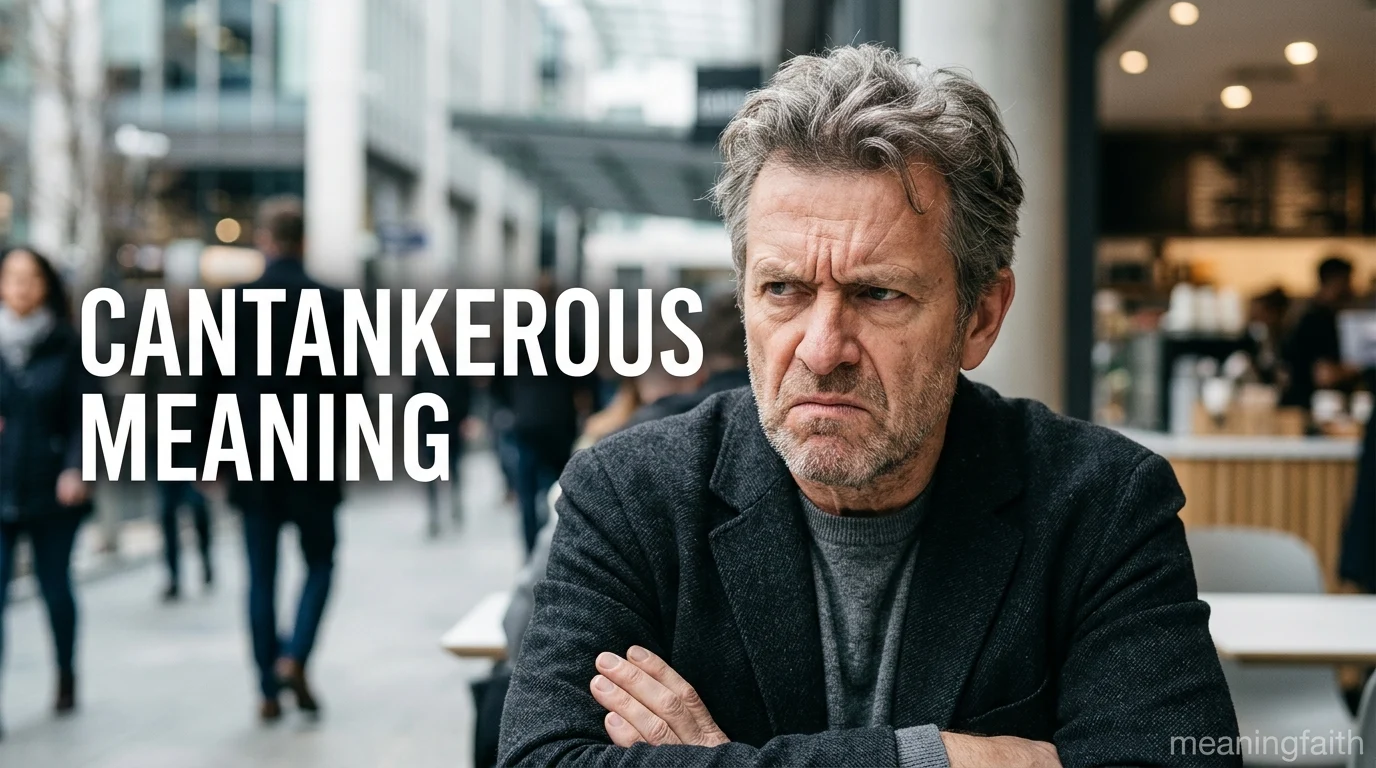
Cantankerous meaning refers to being bad-tempered, argumentative, difficult to deal with, or inclined to complain and disagree frequently. In the English language, the word is often used to describe a personality trait or temperament that makes social interaction challenging. Whether discussing an elderly person in a novel, a stubborn coworker, or a fictional character in literature, the term carries a vivid image of someone who is constantly irritable or quarrelsome.
Understanding this word goes beyond a simple dictionary definition. Its history, cultural use, and emotional nuances reveal why it remains a popular descriptive term. References in literature, communication studies, and authoritative sources such as the Oxford English Dictionary have helped preserve its meaning over time.
In everyday conversation, the word can be humorous, critical, or even affectionate depending on context. This guide explores the full meaning, origin, and practical use of the term so you can recognize and apply it accurately.
cantankerous meaning means: a person who is habitually bad-tempered, argumentative, stubborn, or difficult to get along with. The word describes a personality trait marked by frequent complaints, disagreement, irritability, and conflict in social interaction. It often refers to someone whose attitude makes communication challenging, though the term can sometimes be used humorously or affectionately.
Origin & History of cantankerous meaning
The history behind the term is surprisingly complex. Linguists generally agree that “cantankerous” emerged in the English language during the eighteenth century, though its exact origin remains uncertain.
Some language historians believe it may have evolved from dialect words used in Britain. Others suggest connections to older forms of speech found in Middle English. Unlike many English words that have clear Latin or Greek roots, this term has a somewhat mysterious background.
The Oxford English Dictionary notes that the precise etymology remains debated among scholars. Despite this uncertainty, the meaning has stayed remarkably consistent for centuries. Historical records show the word being used to describe people who were argumentative, difficult, and prone to conflict.
Literature from the nineteenth century frequently employed the term to portray stubborn characters. Authors used it to create memorable personalities whose behavior generated tension within stories.
One unique aspect of the word is its durability. Many descriptive terms fade over time, but “cantankerous” continues to appear in books, journalism, and everyday speech. Its vivid sound and clear emotional impact help explain why it remains a useful part of modern vocabulary.
Primary Meaning of cantankerous meaning
At its core, the primary meaning centers on a difficult temperament. A cantankerous person is not simply having a bad day. Instead, the word suggests a consistent pattern of behavior.
Several characteristics commonly define this personality trait:
- Frequent irritability
- Argumentative behavior
- Resistance to cooperation
- Persistent complaining
- Negative attitude toward others
The term often implies that conflict arises naturally around the individual. For example, someone who disagrees with every suggestion during a meeting might be described as cantankerous.
Importantly, the word does not necessarily indicate cruelty. A person may be cantankerous without being malicious. They may simply possess a temperament that leads to constant disagreement or frustration.
In communication, the term serves as a shorthand description of behavior that repeatedly creates tension. Because it conveys both attitude and behavior, it is more specific than words such as “annoyed” or “grumpy.”
The emotional tone is usually negative, but context matters. Friends and family members sometimes use the term affectionately when describing a loved one who complains often but remains fundamentally kind-hearted.
Cultural Meanings of cantankerous meaning
Different cultures interpret difficult personalities in different ways, which influences how the term is understood.
In many English-speaking countries, a cantankerous individual is often portrayed as an older person who complains about changes in society. Films, television programs, and literature frequently use this stereotype. The image of a grumbling neighbor or elderly person has become closely associated with the word.
In the United Kingdom, the term may carry a slightly humorous tone. British humor often embraces eccentric and difficult characters, making cantankerous behavior a source of entertainment.
In the United States, the word is commonly used to describe public figures, political commentators, or fictional personalities known for confrontational behavior. The emphasis is often on argumentativeness rather than simple irritation.
Literature has played a major role in shaping cultural understanding. Authors have long used cantankerous characters to create conflict, reveal social tensions, and add depth to stories.
Modern media also influences perception. Viewers may see a cantankerous character as amusing, relatable, or even wise beneath a rough exterior. This layered portrayal demonstrates how culture can soften the negative implications of the term.
Spiritual / Religious Meaning of cantankerous meaning
The word itself does not possess a direct spiritual or religious meaning. However, many religious traditions discuss behaviors that resemble what people describe as cantankerous.
In Christian teachings, excessive anger, hostility, and unnecessary conflict are often presented as obstacles to healthy relationships. Religious texts frequently encourage patience, kindness, and self-control as alternatives.
Buddhist philosophy similarly emphasizes reducing attachment to anger and cultivating compassion. A habitually argumentative attitude may be viewed as a source of suffering for both the individual and others.
Jewish, Islamic, and Hindu traditions also contain teachings about managing temperament and maintaining respectful communication. These principles contrast with behaviors typically associated with a cantankerous disposition.
From a spiritual perspective, the term can therefore serve as a reminder of the importance of emotional awareness. Many traditions encourage individuals to examine their attitude and behavior when conflict becomes a recurring pattern.
Rather than labeling someone permanently, spiritual approaches often focus on personal growth and the possibility of change. This viewpoint offers a more compassionate understanding of difficult temperament.
Slang / Modern Usage of cantankerous meaning
In modern usage, the word remains surprisingly popular despite its old-fashioned sound.
Today, people often use it informally to describe someone who is difficult, stubborn, or constantly complaining. Social media posts, news articles, and casual conversations frequently include the term.
Modern usage often softens the criticism. For example, someone might jokingly refer to a grandparent as cantankerous while expressing affection and admiration.
The word also appears in workplace communication. A manager might describe a difficult client as cantankerous, meaning the person tends to argue and resist cooperation.
In entertainment, writers use the term to create memorable characters. A cantankerous detective, teacher, or neighbor immediately evokes a recognizable personality.
Unlike slang terms that change rapidly, this word has maintained its relevance because it describes a timeless human behavior. People continue to encounter difficult personalities in daily life, making the term useful across generations.
Its distinctive sound also contributes to its appeal. The word itself feels expressive, helping speakers communicate frustration or amusement with precision.
Context-Based Meanings of cantankerous meaning
In Personal Relationships
Within relationships, the word describes someone who frequently argues, criticizes, or complains. The behavior may strain communication and create recurring conflict.
A partner who rejects every suggestion or starts disagreements over minor issues might be described as cantankerous. However, context matters because occasional irritability does not justify the label.
In the Workplace
Professional environments often use the term for employees, customers, or colleagues who resist collaboration. A cantankerous coworker may challenge ideas aggressively and create tension during discussions.
The focus here is usually on behavior rather than personality. Someone may act cantankerously in stressful situations without consistently displaying the trait.
In Literature and Media
In literature, cantankerous characters often drive plot development. Their difficult attitude creates obstacles, conflict, and opportunities for character growth.
Many famous fictional figures begin as unpleasant or argumentative individuals but reveal deeper qualities over time. This complexity makes the trait especially valuable in storytelling.
Across these contexts, the central meaning remains consistent: a tendency toward argument, complaint, and difficult social interaction.
Color / Design / Style Variations
Unlike symbols, flowers, or visual motifs, the word has no official color or design variations. However, creative industries sometimes associate visual cues with the personality trait.
Illustrators often depict cantankerous individuals using darker clothing, stern facial expressions, crossed arms, and furrowed brows. These visual elements communicate irritation and resistance.
In film and animation, costume design may reinforce the character’s temperament. A grumpy character might wear practical, muted clothing that reflects a no-nonsense attitude.
Writers and artists sometimes contrast appearance and behavior for dramatic effect. A cheerful-looking person may behave in a surprisingly cantankerous manner, creating humor and complexity.
These associations are artistic rather than linguistic. The meaning of the word itself does not change according to color, style, or design. Instead, visual representations help audiences recognize the personality trait more quickly.
Understanding this distinction prevents confusion between literal meaning and creative interpretation.
Common Misconceptions About cantankerous meaning
Several misunderstandings surround the term.
One common misconception is that it only applies to elderly people. While older characters are often portrayed this way in literature and media, the trait can appear at any age.
Another misconception is that a cantankerous person is always angry. In reality, the behavior may involve stubbornness, criticism, or argumentativeness without intense anger.
Some people also assume the word means cruel or abusive. Although difficult behavior can be unpleasant, the term primarily describes temperament rather than harmful intent.
Another mistake involves confusing temporary mood with personality. Someone who is irritated after a stressful day is not necessarily cantankerous. The word generally suggests a recurring pattern.
Finally, many people overlook the humorous use of the term. Family members sometimes use it affectionately to describe someone whose complaints have become a familiar and even endearing part of their personality.
Recognizing these distinctions leads to more accurate communication and a deeper understanding of the word.
How to Use cantankerous meaning in a Sentence
Using the word correctly requires understanding its focus on persistent behavior rather than temporary emotion.
Here are several examples:
- The cantankerous neighbor complained about every community event.
- Despite his cantankerous attitude, the professor cared deeply about his students.
- The novel featured a cantankerous sailor who argued with everyone aboard the ship.
- Her coworkers found her cantankerous behavior difficult during meetings.
- The grandfather’s cantankerous remarks often concealed a warm sense of humor.
These examples show that the word can appear in professional, personal, and literary contexts. The key idea is ongoing irritability, stubbornness, or argumentativeness.
Frequently Asked Questions About cantankerous meaning
What does cantankerous meaning mean?
It refers to being bad-tempered, argumentative, stubborn, or difficult to get along with. The word describes a personality trait characterized by frequent complaints, disagreement, and irritability. It usually suggests a recurring pattern of behavior rather than a temporary mood.
What is the origin of cantankerous meaning?
The term entered the English language during the eighteenth century. Linguists have not reached complete agreement about its exact origin, though some connect it to older British dialect forms and possible Middle English influences. Its meaning has remained relatively stable over time.
What does cantankerous meaning mean in literature?
In literature, the term often describes characters who create conflict through stubbornness or argumentativeness. Authors use such personalities to develop plots, reveal social tensions, and provide opportunities for character growth. These characters are frequently memorable because of their strong attitudes.
Is cantankerous meaning positive or negative?
The word is generally negative because it highlights difficult behavior and conflict. However, context can soften its impact. Friends and family members sometimes use it humorously or affectionately when describing someone whose grumpy nature is familiar and harmless.
What is the difference between cantankerous meaning and grumpy?
A grumpy person may simply be in a bad mood temporarily. A cantankerous person typically displays a consistent pattern of argumentativeness, stubbornness, and difficult behavior. The latter suggests a more enduring temperament rather than a passing emotional state.
What does cantankerous meaning symbolize?
The term often symbolizes resistance, stubbornness, and interpersonal conflict. In stories and cultural portrayals, it may also represent wisdom hidden beneath a rough exterior. The symbolism depends heavily on context and character development.
Why do people use cantankerous meaning?
People use the word because it describes a specific type of difficult temperament with precision. It captures more than simple irritation by suggesting a habitual tendency toward complaint, disagreement, and challenging social interaction.
Related Searches & Topics
Many people searching for this term also look for the meaning of grumpy. While both words describe unpleasant moods, grumpy often refers to temporary irritation, whereas cantankerous suggests a long-term personality trait.
Another related search is irritable personality. Irritability involves becoming annoyed easily, but a cantankerous temperament usually includes active disagreement and argumentative behavior in addition to irritation.
Users frequently compare the term with stubbornness. Stubborn individuals resist changing their views, while cantankerous people often combine stubbornness with complaints, criticism, and conflict.
The concept of temperament is also closely related. Psychologists use temperament to describe consistent behavioral tendencies, making it useful for understanding why some individuals appear more argumentative than others.
Many readers explore difficult personality traits after learning the definition. Traits such as negativity, hostility, and resistance to cooperation often overlap with behaviors associated with cantankerous individuals.
Interest in communication and conflict commonly follows this topic. Understanding how difficult attitudes affect social interaction can improve relationships and reduce unnecessary disagreements.
Conclusion
The phrase cantankerous meaning refers to a personality trait marked by argumentativeness, irritability, stubbornness, and frequent complaints. Its roots in the English language stretch back centuries, and its meaning has remained remarkably consistent across literature, culture, and everyday communication.
While the term often carries a negative tone, it can also be used humorously or affectionately depending on the situation. Understanding the historical background, contextual uses, and common misconceptions surrounding the word helps reveal its full significance.
Whether describing a fictional character, a workplace personality, or a familiar family member, cantankerous meaning captures a distinctive human temperament that remains relevant today. Which meaning of cantankerous meaning resonates most with you?

Sarah Mitchell is a content researcher and writer at MeaningFaith.com. She specializes in name meanings, symbolism, and cultural interpretations. Her work focuses on uncovering the origins, history, and deeper significance behind names and symbols, helping readers discover meaningful insights through well-researched and easy-to-understand content.