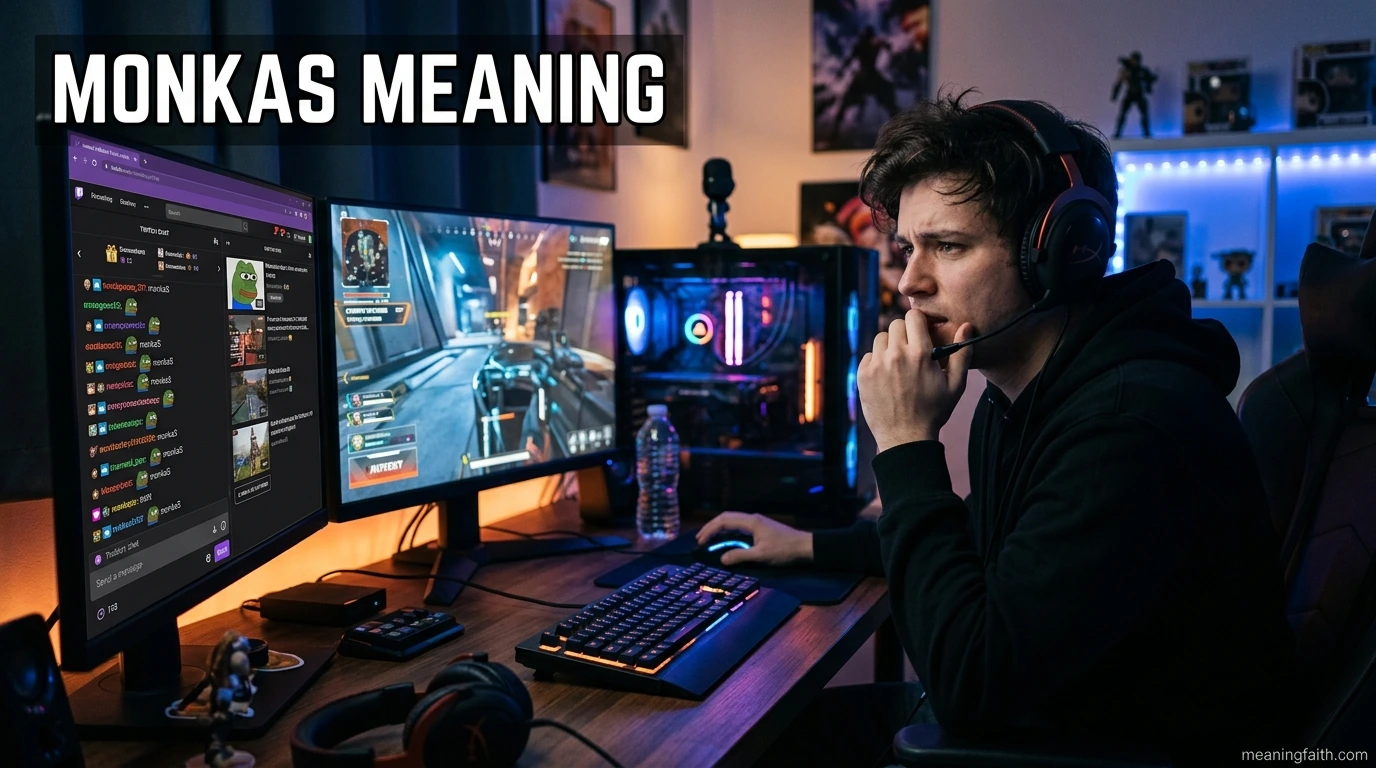
The monkas meaning refers to an internet slang term and emote used to show anxiety, nervousness, fear, or a feeling that something stressful is happening. The term became popular through Twitch chat and online gaming communities, where viewers use it when a streamer faces a difficult moment, a risky situation, or an intense challenge.
The word “monkas” is closely connected to meme culture, especially the image of Pepe the Frog, a character created by artist Matt Furie. Over time, different versions of Pepe became popular across online communities, including reaction images and Twitch emotes designed to express specific emotions.
Unlike traditional words with dictionary definitions, monkas is part of modern digital communication. Its meaning depends heavily on the situation where it appears. Someone might use it seriously when something looks stressful, or humorously when a small problem is exaggerated for entertainment.
Understanding monkas requires knowing how internet communities, livestream culture, and gaming conversations developed their own visual language through emotes and memes.
monkas means: Monkas means a Twitch emote and internet slang expression used to represent anxiety, nervousness, stress, or fear. It usually shows a sweating Pepe the Frog face and appears in online chats when viewers feel that a situation is tense, risky, awkward, or difficult.
Origin & History of monkas
The origin of monkas comes from online meme culture and the evolution of Pepe the Frog images. Pepe was created by cartoonist Matt Furie in 2005 as part of the comic series Boy’s Club. The character later spread across internet communities, where users transformed Pepe into many different reaction images representing emotions.
The specific monkas emote became associated with the anxious version of Pepe. It gained popularity through platforms such as 4chan and later moved into Twitch communities. Twitch users adopted many custom emotes to communicate feelings quickly without typing full sentences.
Third-party Twitch extension platforms such as FrankerFaceZ and BetterTTV helped make custom emotes more widely available. These services allowed communities to add and use expressions beyond Twitch’s official emote collection.
The rise of livestreaming during the 2010s helped monkas become recognizable among gamers and stream viewers. When a streamer encountered a challenging boss fight, a competitive match, or an unexpected event, viewers would often spam monkas to show nervous anticipation.
Today, monkas represents a broader internet tradition: using images as emotional shortcuts. It is less about the literal face and more about sharing a common reaction with an online community.
Primary Meaning of monkas
The primary monkas meaning is anxiety or nervousness. The emote usually communicates the feeling of “something bad might happen” or “this situation is becoming stressful.” It is often used when someone is waiting for an uncertain outcome.
For example, a viewer watching a streamer attempt a difficult game level may type monkas when the character has very little health remaining. The viewer is not necessarily afraid in a serious way; instead, they are expressing playful tension.
Common meanings of monkas include:
- Feeling nervous about what will happen next
- Expecting a difficult or uncomfortable moment
- Reacting to a stressful situation with humor
- Showing concern while watching someone take a risk
- Creating a dramatic reaction in chat
The meaning can change depending on tone. In one conversation, monkas might represent genuine concern. In another, it may simply exaggerate a small inconvenience for comedy.
Like many internet expressions, monkas works because people understand the shared emotion behind it. The image communicates a feeling instantly, even between strangers in a fast-moving chat.
Cultural Meanings of monkas
Monkas reflects the culture of online communities where visual reactions have become a major form of communication. In Twitch culture, viewers often use emotes as a shared language that creates a sense of belonging.
Livestream communities develop their own vocabulary, jokes, and traditions. A single emote can become connected to a specific streamer, game, or community experience. Monkas became widely recognized because it captured a common feeling in gaming: watching a tense moment unfold in real time.
The broader culture behind monkas comes from meme communities that remix existing images into new meanings. Pepe the Frog is an example of how internet users can transform a character into many emotional symbols.
The use of monkas also shows how digital communication differs from everyday conversation. A person may not type “I am worried about what happens next.” Instead, they can post one emote that communicates the same emotion instantly.
Countries around the world participate in this online culture because platforms like Twitch connect global audiences. Although the term began in English-speaking internet spaces, many gaming communities recognize its meaning internationally.
Spiritual / Religious Meaning of monkas
Monkas does not have a spiritual or religious meaning. It is a modern internet expression connected to meme culture, livestreaming, and online communication rather than any belief system or tradition.
The confusion sometimes happens because people see symbolic images online and assume they represent deeper cultural meanings. However, monkas is designed primarily as a reaction image. Its purpose is to express an emotional response such as nervousness, stress, or uncertainty.
The image of Pepe used in monkas is not a religious symbol. It comes from a comic character that was later adapted by internet communities into many different forms.
When people use monkas, they are usually participating in a shared online joke or emotional reaction. The meaning comes from the situation, conversation, and community rather than spiritual symbolism.
Slang / Modern Usage of monkas
In modern slang, monkas is mainly used in online chats, especially Twitch livestreams, gaming discussions, and meme communities. It functions like a quick emotional reaction rather than a traditional word.
A user may type monkas when:
- A streamer makes a risky decision
- A competitive game reaches a tense moment
- Someone reveals unexpected information
- A situation becomes awkward or uncomfortable
- A person predicts trouble
The spelling “monkas” comes from the name used for the emote rather than a standard English word. You may also see variations such as “MonkaS” with capital letters because Twitch emote names often use specific formatting.
The term is usually humorous. Someone typing monkas is rarely describing serious anxiety. Instead, they are often exaggerating a feeling to make the moment more entertaining.
Internet slang changes quickly, but monkas has remained recognizable because the emotion it represents is universal. People in many online communities understand the feeling of watching something uncertain happen and reacting with nervous humor.
Context-Based Meanings of monkas
monkas in gaming
In gaming communities, monkas usually appears during intense gameplay moments. A viewer might type it when a player is close to losing, facing a difficult opponent, or attempting something risky.
For example, during a difficult boss battle, chat messages filled with monkas show that viewers feel nervous about the outcome. It creates a shared emotional experience between the streamer and audience.
monkas in Twitch chat
On Twitch, monkas is one of many reaction emotes used to communicate quickly. Since livestream chats move rapidly, short visual expressions are easier than long messages.
A streamer may see hundreds of viewers posting monkas when a surprising event occurs. The emote becomes part of the entertainment because the audience reaction itself adds energy to the stream.
monkas in text messages and social media
Outside Twitch, people sometimes use monkas in Discord servers, Reddit discussions, and other online spaces. It usually keeps the same meaning: nervousness, concern, or humorous panic.
Someone might write “the exam results come out tomorrow monkas” to jokingly show stress. The expression works because other internet users recognize the emotional reference.
Color / Design / Style Variations of monkas
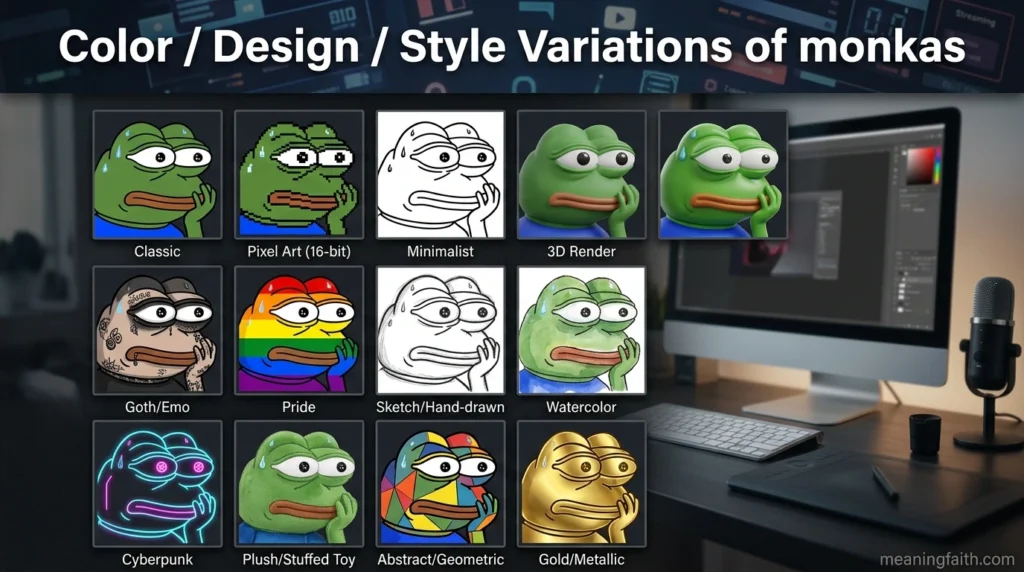
Monkas does not have an official color meaning like traditional symbols or designs, but different versions of the emote may have slightly different visual styles. Most versions focus on Pepe’s anxious facial expression, especially wide eyes and a worried appearance.
The design elements usually communicate:
- Fear through facial expression
- Stress through exaggerated features
- Nervousness through visual tension
- Humor through cartoon exaggeration
Different Twitch communities may use modified versions of monkas. Some versions may add text, change colors, or combine the character with other meme styles.
These variations show how internet art evolves. A simple image can become a flexible communication tool that changes based on the needs of different communities.
Common Misconceptions About monkas
One common misconception is that monkas always represents serious fear. In reality, it is usually a playful expression. The emotion is often exaggerated for entertainment rather than a genuine statement about someone’s mental state.
Another misunderstanding is that monkas is a traditional slang word with a long history. It is actually a relatively recent internet term connected to digital communities and emote culture.
Some people also confuse monkas with every Pepe-related meme. While monkas uses Pepe imagery, not all Pepe memes have the same meaning. Different versions of the character represent different emotions and jokes.
A final misconception is that monkas only belongs to gamers. Although gaming helped popularize it, the term has spread to many online spaces where people discuss events, jokes, and everyday situations.
How to Use monkas in a Sentence
Here are examples of how monkas can appear naturally:
- “The streamer has one chance left to win, monkas.”
- “Waiting for the results tomorrow is giving me monkas vibes.”
- “That final round was so intense, everyone in chat was spamming monkas.”
- “The update looks risky, monkas moment incoming.”
These examples show that monkas is usually used as a reaction rather than a complete replacement for a normal word. It adds emotion and humor to online conversations.
Frequently Asked Questions About monkas
What does monkas mean?
Monkas means an internet emote used to express nervousness, anxiety, stress, or fear in a humorous way. It is commonly seen on Twitch and gaming platforms. The image usually shows an anxious version of Pepe the Frog, and users post it when a situation feels tense or uncertain.
What is the origin of monkas?
The origin of monkas comes from online meme culture surrounding Pepe the Frog. Created by Matt Furie, Pepe later became a widely adapted internet character. The anxious Pepe image became popular in communities such as 4chan before becoming a recognizable Twitch emote through platforms like FrankerFaceZ and BetterTTV.
What does monkas mean in Twitch chat?
In Twitch chat, monkas means viewers feel nervous about what is happening on stream. It often appears during difficult gameplay, surprising moments, or situations where failure seems possible. It helps viewers share a collective reaction quickly without typing a full message.
Is monkas positive or negative?
Monkas is usually neutral and depends on the situation. It can represent concern or stress, but it is often used positively as a funny reaction. Most users are not expressing serious fear; they are participating in internet humor and shared community behavior.
What is the difference between monkas and other Pepe emotes?
The difference is the emotion each Pepe emote represents. Monkas specifically focuses on nervousness and anxiety, while other Pepe variations may express happiness, sadness, confusion, or excitement. The image style and context determine the intended meaning.
What does monkas symbolize?
Monkas symbolizes a moment of tension, uncertainty, or nervous anticipation. It represents the feeling of watching something risky happen and waiting to see the outcome. In internet culture, it has become a visual shortcut for saying, “This is stressful.”
Why do people use monkas?
People use monkas because it quickly communicates an emotional reaction. In fast-moving chats, an emote is easier than writing a sentence. It also creates a shared joke among community members who understand the same online references.
Related Searches & Topics
People searching for “Pepe the Frog meaning” are often interested in understanding the character behind monkas. Pepe began as a comic character before becoming one of the most recognizable figures in internet meme history.
The query “MonkaS Twitch emote” is another common related topic. This search focuses on how the emote became popular among streamers, viewers, and gaming communities on Twitch.
Many users also search for “BetterTTV emotes meaning” because third-party extensions helped spread custom Twitch reactions. These tools changed how online communities communicate through visual expressions.
The phrase “Twitch slang meanings” connects to monkas because livestream platforms have developed many unique expressions. Learning these terms helps new viewers understand fast-moving chat conversations.
Another related search is “internet anxiety memes,” which explores how online communities use humor to represent stressful situations. Monkas fits into this larger category of emotional reaction memes.
Conclusion
Monkas represents a unique part of internet communication where images and slang work together to express emotions quickly. Its main meanings include nervousness, playful fear, and tension during uncertain moments. The term grew from Pepe the Frog meme culture and became widely recognized through Twitch, gaming communities, and livestream chats.
While monkas does not have a traditional historical or spiritual meaning, it has become an important symbol of modern digital expression. It shows how online communities create new ways to share reactions and connect through humor.
The meaning of monkas depends on context, but its core idea remains the same: a funny way to show that something feels stressful or uncertain. Which meaning of monkas resonates most with you?

Daniel Matthews is a Bible researcher and Christian writer with a passion for explaining biblical terms, names, symbols, and theological concepts in simple language. He specializes in Old Testament studies, Hebrew word meanings, and biblical symbolism, helping readers better understand Scripture and its historical context.