An anthology series meaning refers to a type of creative series where each installment, season, or episode presents a separate story, often with different characters, settings, and themes. Unlike traditional series that follow one continuous storyline, an anthology can explore new narratives while keeping a shared concept or style. The idea connects to forms of storytelling found in literature, television, and film, where creators build collections of unique works.
The concept of an anthology has existed for centuries, with roots connected to collections of poems, short stories, and other written works. Modern audiences often recognize anthology series through television platforms such as Netflix, where each season may introduce a completely different world.
Understanding the anthology series meaning helps explain why shows like Black Mirror and other anthology productions can change characters and plots while still being considered one series. This format gives writers freedom to explore different ideas while giving viewers fresh experiences with every story.
anthology series means: An anthology series means a collection of separate stories presented under one series title, where episodes or seasons may feature different characters, settings, and plots. The format is common in television, literature, and film, allowing creators to explore multiple themes without following one continuous storyline.
Origin & History of anthology series meaning
The origin of the anthology series meaning comes from the older idea of an anthology, a word derived from the Greek term “anthologia,” meaning a collection of flowers. Ancient Greeks used the term to describe collections of poems, especially works gathered from different writers. Over time, the meaning expanded to include collections of creative works across literature and other forms of art.
In literature, anthologies became an important way to preserve and share different voices. Collections of poetry, short stories, and essays allowed readers to experience many authors in one volume. This tradition influenced modern storytelling formats, including television anthology series.
During the early years of television, anthology programs became popular because they allowed networks to present different stories each week without requiring viewers to follow a long storyline. Shows such as The Twilight Zone used this structure to explore science fiction, mystery, and social themes through independent episodes.
The rise of streaming platforms changed how audiences experience anthology series. Services like Netflix helped introduce new generations to the format by making complete seasons available for viewers who enjoy short, powerful narratives. Today, anthology series remain popular because they combine the variety of short stories with the visual impact of television.
Primary Meaning of anthology series meaning
The primary anthology series meaning describes a television, film, or literary format where multiple independent stories are connected through a common title, theme, genre, or creative approach. The main feature is that the stories do not depend on one continuous plot.
For example, one episode of an anthology series might focus on a futuristic society, while the next episode may explore a completely different character and situation. The connection usually comes from the overall idea behind the series rather than shared characters.
Common features of an anthology series include:
- Different protagonists in separate stories
- New settings or time periods
- Independent plots
- A shared theme, genre, or creative vision
- Flexible storytelling structure
This format differs from regular serialized shows, where viewers follow the same characters through many episodes and seasons. In an anthology, audiences can often start with any episode because each story works independently.
Anthology storytelling appears in many forms. A book containing several short stories is an anthology, while a television program featuring separate narratives is an anthology series. The format gives creators the ability to experiment with ideas that might not work within a traditional storyline.
Writers often choose this structure because it provides creative freedom. They can explore different emotions, cultures, and situations without being limited by previous episodes. This is one reason anthology series continue to attract both creators and audiences.
Cultural Meanings of anthology series meaning
The cultural meaning of anthology series meaning is connected to the human desire to share different perspectives and experiences. Throughout history, societies have preserved stories by collecting works from multiple voices. Anthologies represent diversity because they allow many viewpoints to exist within one larger collection.
In literature, anthologies have helped introduce readers to writers from different backgrounds, countries, and historical periods. A single collection may include stories that reflect different social issues, traditions, and personal experiences.
Television anthology series continue this tradition by presenting varied narratives. Instead of focusing on one hero or one world, they can examine different communities and cultural ideas. This makes anthology storytelling useful for exploring topics such as identity, technology, relationships, and social change.
A modern example is Black Mirror, which uses separate stories to examine the relationship between humans and technology. Each episode presents a different situation, but the larger theme connects to modern concerns about society and innovation.
Anthology series can also preserve cultural storytelling styles. By featuring different creators, actors, and settings, they provide opportunities for many types of voices to be represented. This flexibility has helped the format remain relevant across countries and generations.
Spiritual / Religious Meaning of anthology series meaning
The anthology series meaning does not have a specific spiritual or religious definition, but the anthology concept has connections to traditions that value collected wisdom and shared stories. Many religious and philosophical traditions preserve teachings through collections of writings, parables, poems, and historical accounts.
For example, sacred texts often contain multiple narratives, lessons, and voices gathered into a larger collection. While these works are not the same as entertainment anthologies, the structural idea of bringing separate stories together under one purpose is similar.
The anthology format can also explore spiritual themes through fiction. Some anthology series examine questions about morality, human nature, destiny, and personal choices. Because each story can approach a new situation, writers have room to explore different beliefs and philosophies.
Authors such as Margaret Atwood have used collections and interconnected storytelling methods to examine social and ethical questions. While not every collection is an anthology series, this creative approach shows how separate narratives can work together to explore larger ideas.
In this way, the anthology format often reflects a broader human tradition: using many individual stories to understand bigger questions about life, society, and meaning.
Slang / Modern Usage of anthology series meaning
In modern conversations, the anthology series meaning is usually used in discussions about television, movies, books, and streaming content. The phrase is not typically slang, but entertainment fans often use “anthology” as shorthand for a show where every episode tells a different story.
Streaming culture has made the term more common because viewers frequently search for shows that offer complete stories without long commitments. An anthology series can attract people who prefer shorter narratives or enjoy exploring different genres.
Common modern uses include:
- Describing a show with unrelated episodes
- Explaining why characters change between seasons
- Reviewing a collection of different stories
- Comparing storytelling formats
For example, someone might say, “This show is an anthology,” meaning that the audience should not expect the same characters or storyline throughout the entire series.
The popularity of streaming platforms has also expanded the meaning in everyday discussions. Viewers now associate anthology series with creativity, experimentation, and unusual storytelling choices. The format has become a recognizable category alongside dramas, comedies, documentaries, and serialized fiction.
Context-Based Meanings of anthology series meaning
The anthology series meaning can change slightly depending on the context where the term is used. While the core idea always involves separate stories connected by a larger concept, different industries and audiences apply the term in specific ways.
Television context
In television, an anthology series usually means a program where each episode or season tells a different story. The characters, locations, and conflicts may completely change, but the show maintains a shared theme, genre, or creative direction.
Examples include science fiction, horror, crime, and drama anthologies. A viewer watching one episode may experience a mystery story, while another episode explores a futuristic world. This flexibility allows television creators to experiment without being restricted by a single storyline.
Literature context
In books, anthology refers to a collection of written works gathered into one volume. A literature anthology may contain poems, essays, short stories, or selections from multiple authors.
Many schools and universities use literary anthologies to introduce students to important writers and historical movements. These collections allow readers to compare different styles and perspectives in one place.
Film context
In movies, an anthology film combines several separate stories into one feature. The stories may share a theme, location, director, or message. This approach is similar to television anthology series but usually appears in a single movie format.
Streaming context
Modern streaming services have increased interest in anthology storytelling. Platforms such as Netflix allow viewers to discover complete stories quickly, making anthology formats appealing for audiences who enjoy variety.
The context determines how people understand the anthology series meaning, but the central idea remains the same: multiple independent stories connected through a larger creative framework.
Color / Design / Style Variations of anthology series meaning
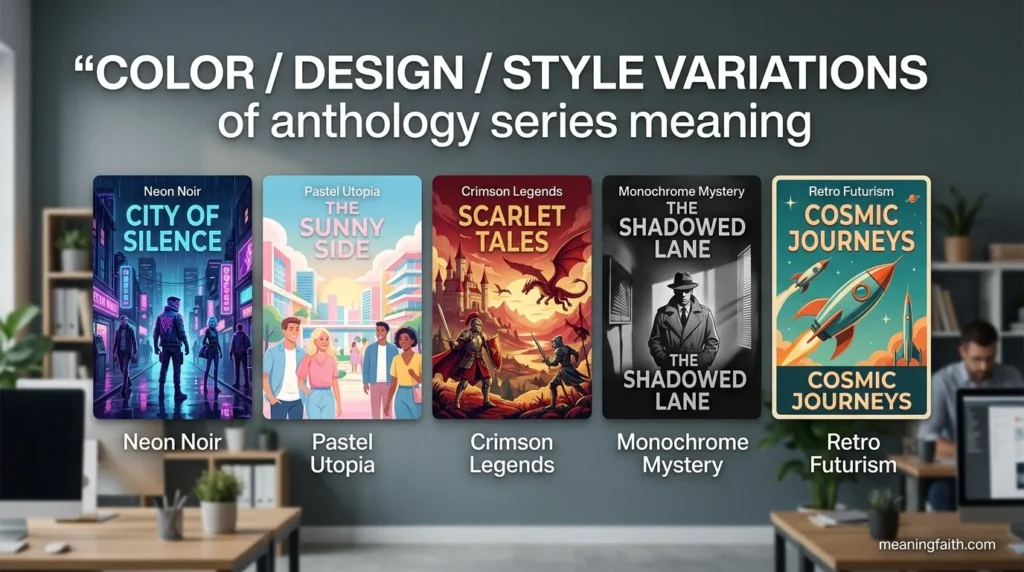
The anthology series meaning does not have a direct color or design symbolism like a tattoo, logo, or cultural symbol. However, anthology storytelling often uses visual styles to communicate different themes and emotions.
Because each story can exist in its own world, creators often experiment with different visual approaches. One episode may use dark, futuristic designs, while another may use historical settings or realistic everyday environments.
Common style variations in anthology series include:
- Dark and atmospheric styles: Often used in horror, mystery, and science fiction stories.
- Minimalist designs: Used when the focus is on characters, emotions, or ideas.
- Historical aesthetics: Used to recreate specific time periods and cultures.
- Futuristic visuals: Common in technology-focused stories.
The flexible design of anthology series is one reason the format remains visually interesting. A traditional series often maintains the same appearance because it follows one world. An anthology can completely reinvent its style with every new story.
In creative fields, the word “anthology” also represents variety and combination. Designers may use the concept to create collections of different images, themes, or artistic approaches that work together as one larger project.
Common Misconceptions About anthology series meaning
One common misconception about the anthology series meaning is that every episode must be completely unrelated. While many anthology series feature separate stories, some connect through shared themes, locations, or background details.
Another misunderstanding is that anthology series are only found in horror or science fiction. Although these genres often use the format, anthology storytelling appears in comedy, drama, romance, crime, and documentary styles as well.
Some people also confuse anthology series with regular shows that have multiple seasons. A traditional series usually follows the same characters and continuing storyline. An anthology series may change its entire cast and setting while keeping the same title.
Another difference is between an anthology and an episodic series. An episodic show may feature the same characters in separate adventures, while an anthology typically introduces a new narrative structure.
For example, a detective show may solve a different case each week but still follow the same detective. That is generally episodic storytelling, not an anthology.
Understanding these differences makes the anthology series meaning clearer. The defining feature is not simply having separate episodes but having separate stories connected by an overall creative identity.
How to Use anthology series meaning in a Sentence
Understanding the anthology series meaning becomes easier when seeing how the phrase works in everyday sentences.
- “I searched for the anthology series meaning because I wanted to understand why each episode had different characters.”
- “The new science fiction show is an anthology series, so every episode explores a different future scenario.”
- “Many literature students study collections of short stories because they represent the traditional anthology format.”
- “The director created an anthology series that explores different human experiences through separate stories.”
- “Unlike a regular drama, this anthology series changes its storyline and characters every season.”
These examples show that the phrase is mainly used when discussing storytelling formats. It helps explain why a series can feel different from episode to episode while still belonging to one creative project.
Frequently Asked Questions About anthology series meaning
What does anthology series meaning?
The anthology series meaning refers to a storytelling format where separate stories are grouped together under one series title. Each episode or season may feature different characters, settings, and plots. The connection usually comes from a shared theme, genre, or creative purpose rather than a continuous storyline.
What is the origin of anthology series meaning?
The origin of anthology series meaning comes from the older word “anthology,” which comes from the Greek term “anthologia,” meaning a collection of flowers. Ancient writers used the concept for collections of poetry. Over time, the idea expanded into literature, film, and television storytelling.
What does anthology series mean in television?
In television, an anthology series means a program where each episode or season presents a different story. Shows like Black Mirror use this structure by creating separate narratives connected through themes such as technology, society, or human behavior. Viewers can often watch individual episodes without following a long storyline.
Is anthology series meaning positive or negative?
The anthology series meaning is generally neutral and does not describe something positive or negative. Many viewers appreciate anthology series because they provide variety and creative freedom. However, some audiences prefer traditional series because they enjoy following the same characters and storylines over multiple seasons.
What is the difference between anthology series and episodic series?
The difference between an anthology series and an episodic series is that anthology shows usually introduce new characters and stories, while episodic shows often keep the same main characters in separate adventures. A detective series with a new case every week is usually episodic, while a collection of unrelated stories is an anthology.
What does anthology series symbolize?
An anthology series can symbolize diversity, creativity, and multiple perspectives. Because it combines different stories within one framework, it represents the idea that many individual experiences can contribute to a larger understanding of a theme or subject.
Why do people use or watch anthology series?
People watch anthology series because they offer variety and fresh storytelling. They allow creators to explore many ideas without being limited to one storyline. Audiences who enjoy short, powerful narratives often appreciate the flexibility and originality that anthology formats provide.
Related Searches & Topics
People often search for “anthology series meaning in TV” because they want to understand why some television shows change characters and settings between episodes. This search usually appears when viewers encounter a series with independent stories rather than a traditional continuing plot.
The term “anthology series examples” is another common search connected to this topic. Viewers often look for examples such as science fiction, horror, or drama anthologies to better understand how the format works.
Many people also search for “difference between anthology and series” because the two terms can seem confusing. A normal series usually follows one storyline, while an anthology brings together separate stories under a shared creative idea.
The phrase “anthology meaning in literature” connects the television format to its historical roots. In books, an anthology is a collection of poems, essays, or short stories from one or multiple writers.
Another related search is “best anthology shows on Netflix.” Streaming services have increased interest in anthology storytelling by making many different types of series available to global audiences.
Conclusion
The anthology series meaning describes a creative format where separate stories are connected through a shared title, theme, genre, or artistic vision. The concept began with literary collections and later expanded into television, film, and modern streaming entertainment.
Anthology storytelling allows writers and creators to explore different characters, cultures, and ideas without following one continuous storyline. It can represent variety, experimentation, and the power of individual stories working together.
Whether found in books, movies, or television, anthology series continue to provide audiences with unique ways to experience storytelling. Understanding anthology series meaning helps viewers recognize why each story can feel different while still belonging to one larger collection. Which meaning of anthology series resonates most with you?

Daniel Matthews is a Bible researcher and Christian writer with a passion for explaining biblical terms, names, symbols, and theological concepts in simple language. He specializes in Old Testament studies, Hebrew word meanings, and biblical symbolism, helping readers better understand Scripture and its historical context.